Growing food, building soil
We use low-cost methods that anyone can replicate — self-watering container gardens, rotational grazing, manure-to-compost, biochar from cleared wood, and native trees grown from seed. The goal is a farm that feeds itself and builds over time.
Self-watering container gardens
Our container garden uses a self-watering wicking system designed by YouTuber Gardening with Leon — water held in a reservoir at the bottom wicks upward through the soil to the roots as needed. Plants stay consistently moist without daily watering, which matters enormously in a Central Texas summer.
We build our tubs from repurposed Purina Rangeland protein buckets — the same ones that feed our cattle. Nothing bought for the purpose, nothing wasted. The design is simple enough that anyone can build one in an afternoon, and the results are genuinely impressive for the effort involved.
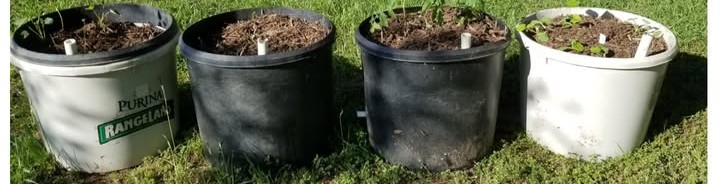
Early days — seedlings just getting established in repurposed protein buckets
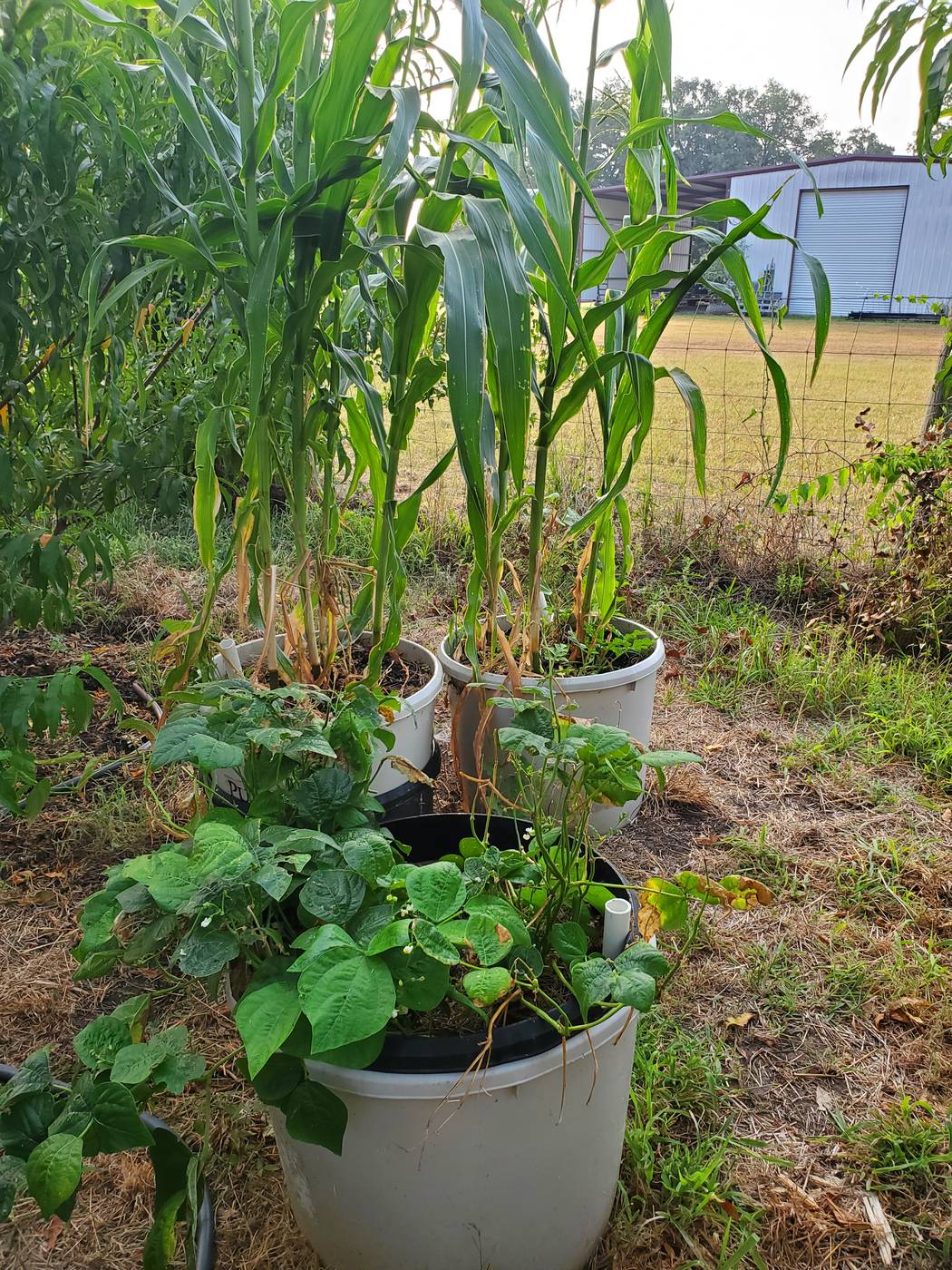
The same system a few weeks later — the wicking method keeps plants thriving with minimal attention
The wicking tub method is one of the skills we share with volunteers who come to work on the farm. You'll leave knowing how to set up your own system wherever you live — balcony, backyard, or farm.
Wicking tub design: Gardening with Leon on YouTubeWhat we grow
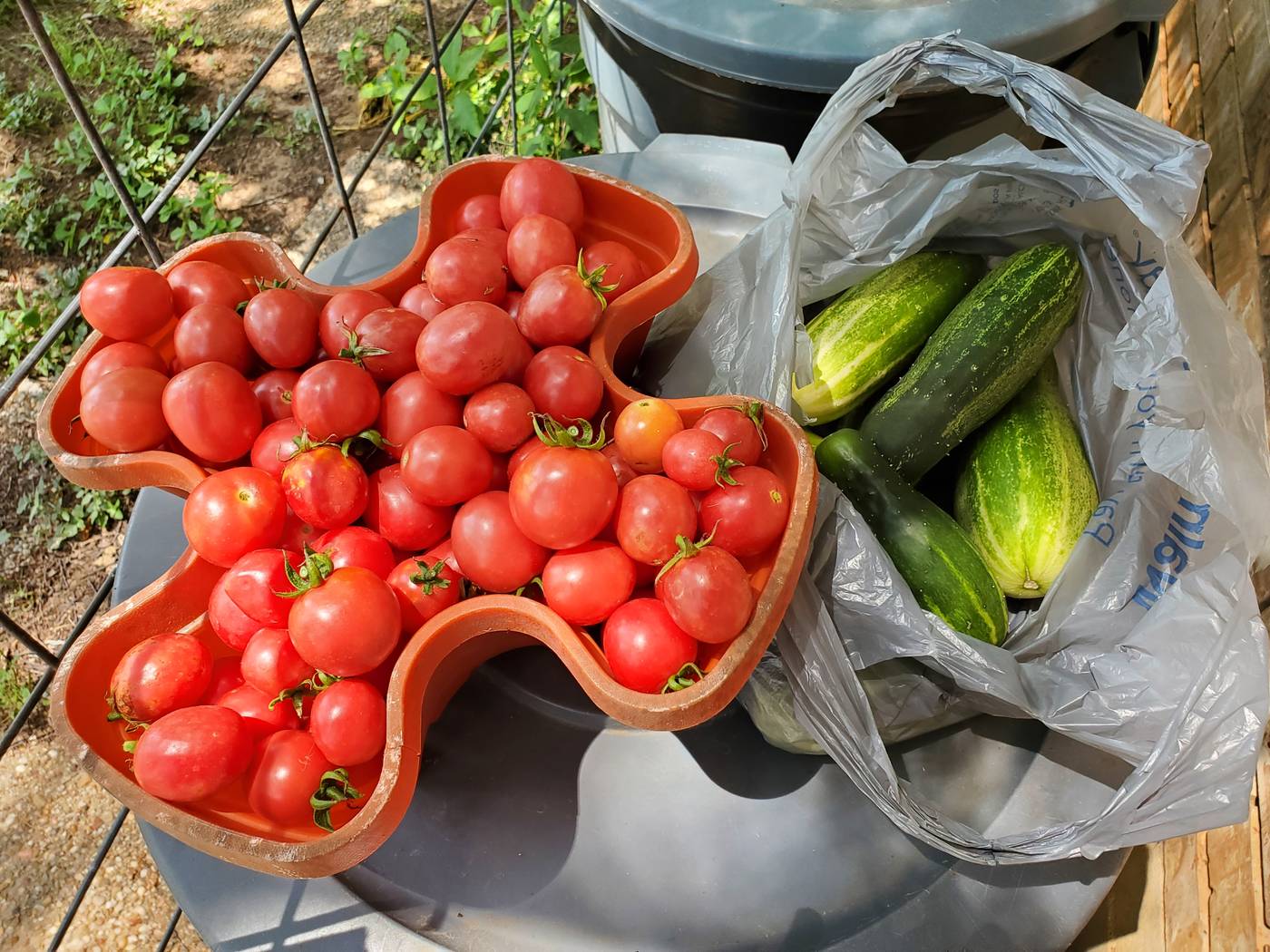
Tomatoes & cucumbers
Central Texas summers are tough but productive. A few wicking tubs produce more than two people can eat.
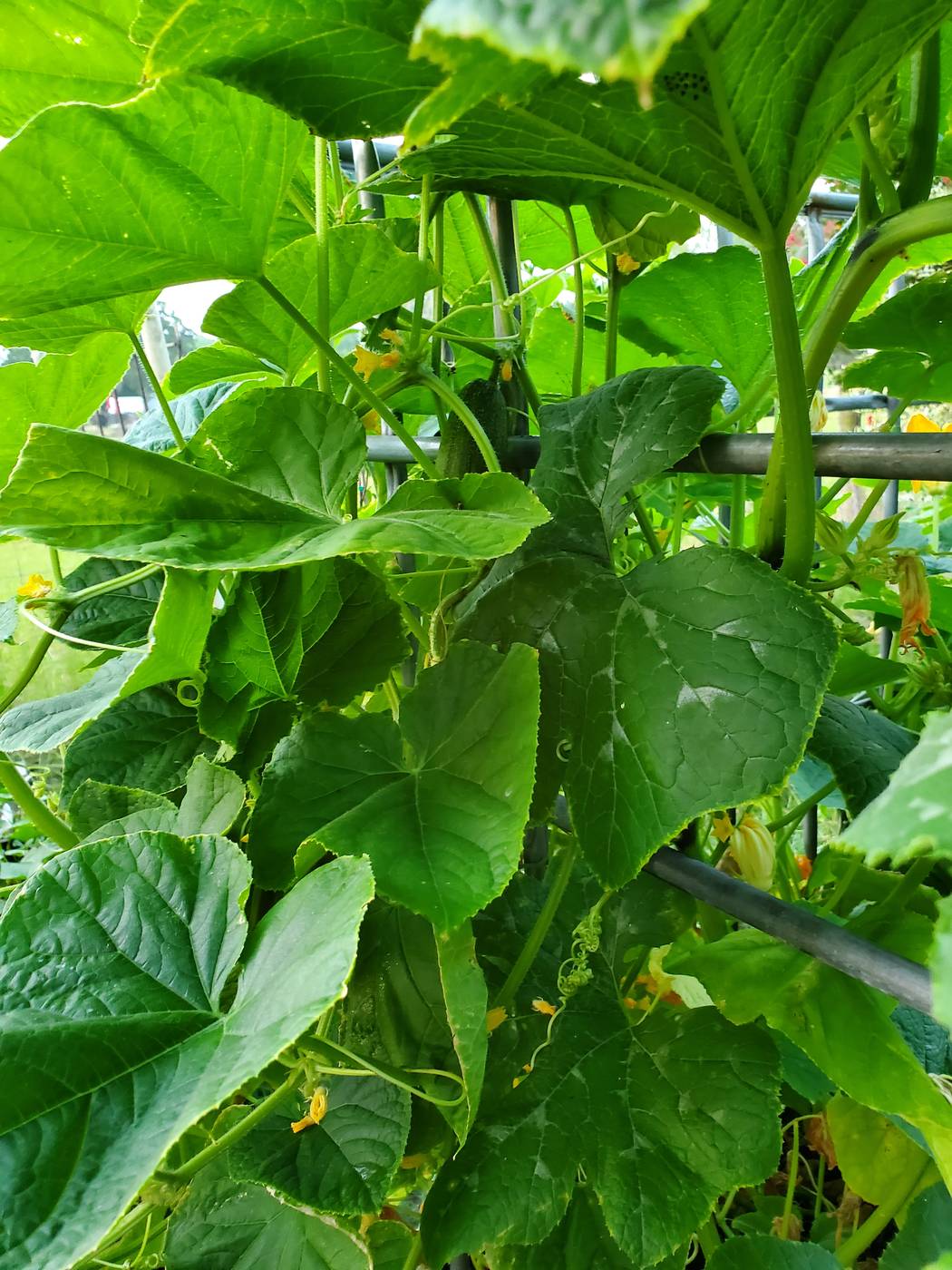
Vertical growing
Cucumbers, beans, and squash trained up simple wire trellises — maximum production from a small footprint.
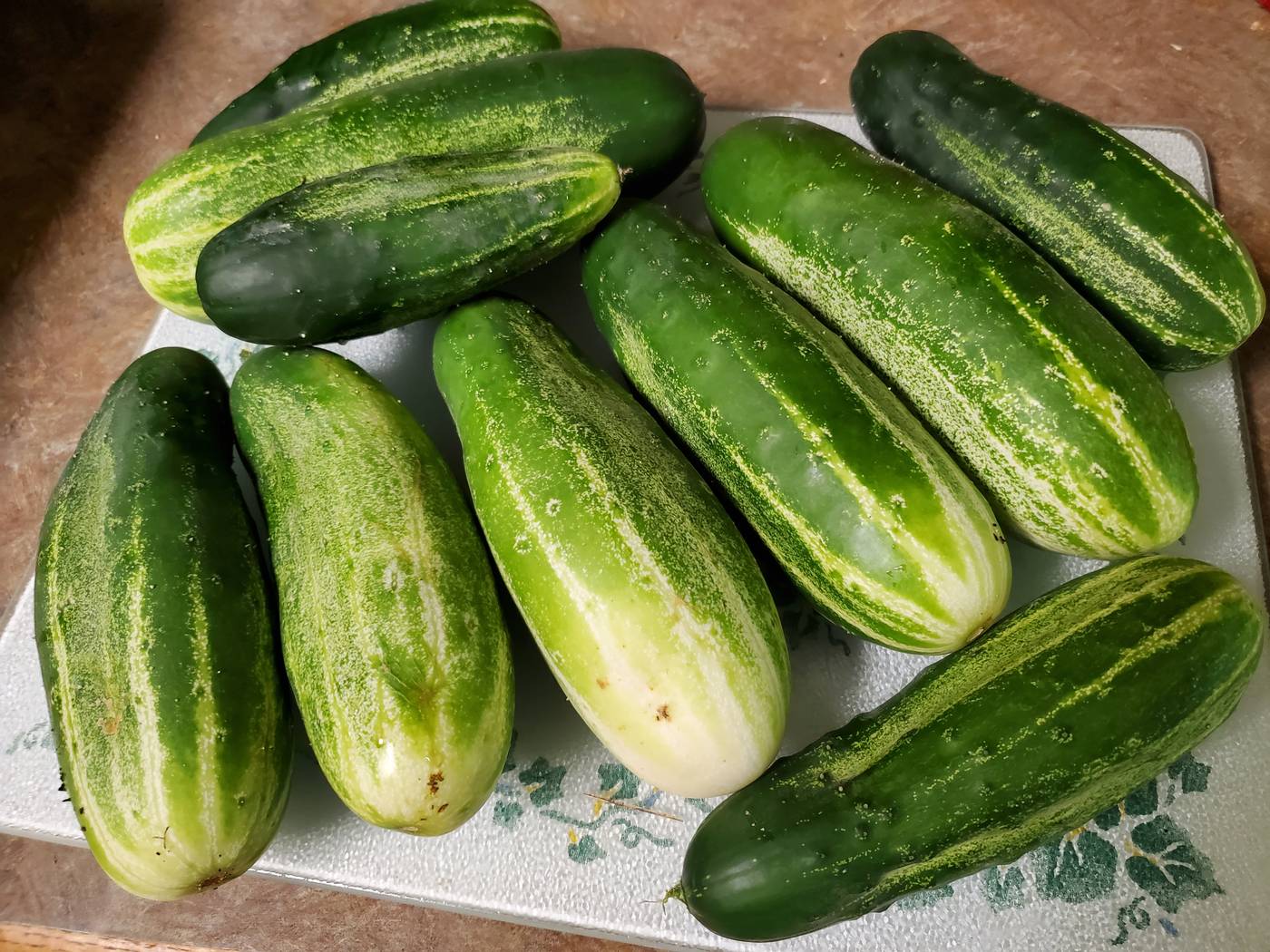
From garden to kitchen
The measure of a garden is what you actually use. These came in the same morning they were picked.
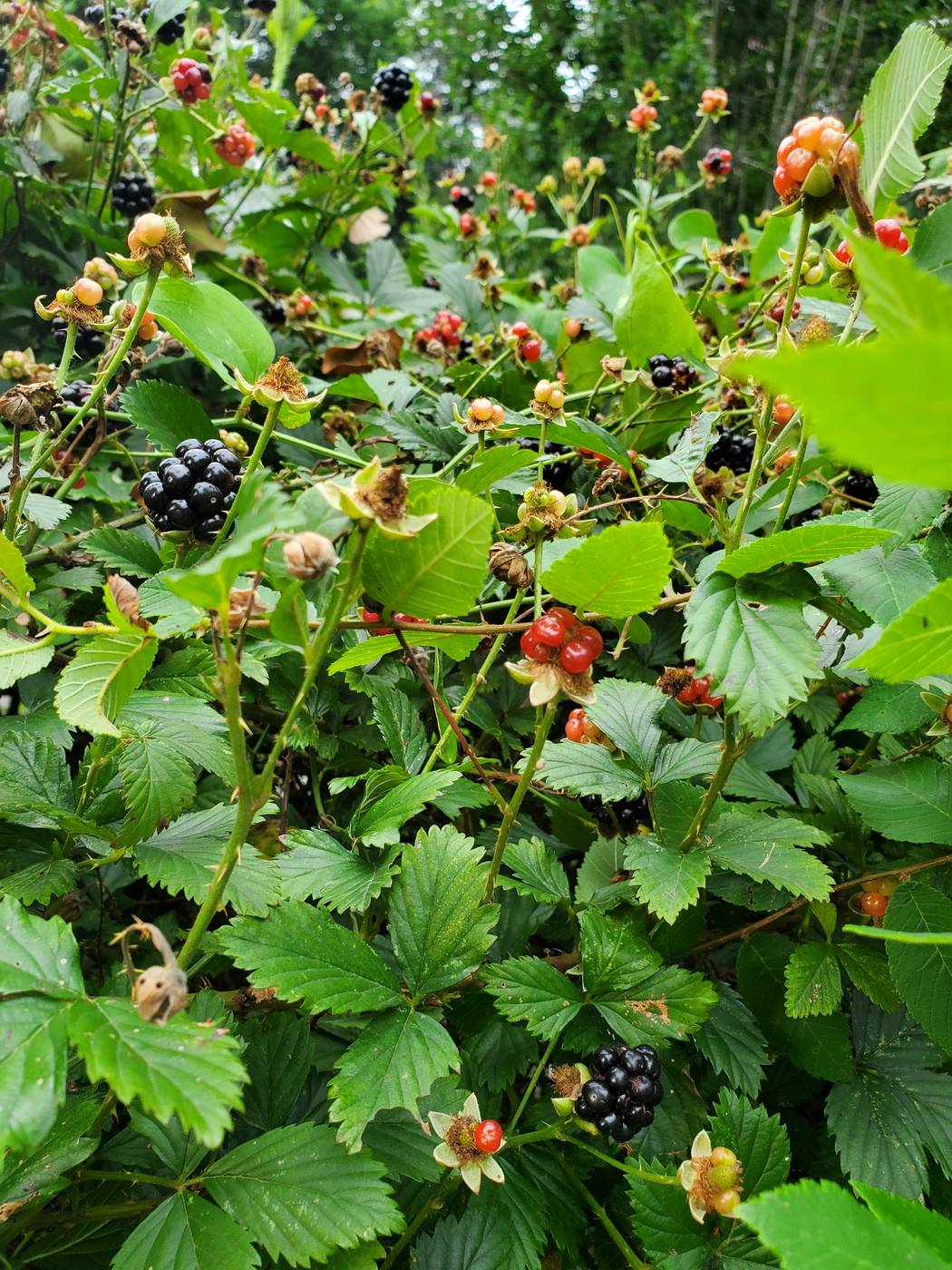
Blackberries
Established cane fruit that returns every year with minimal input. Productive and reliable in our climate.
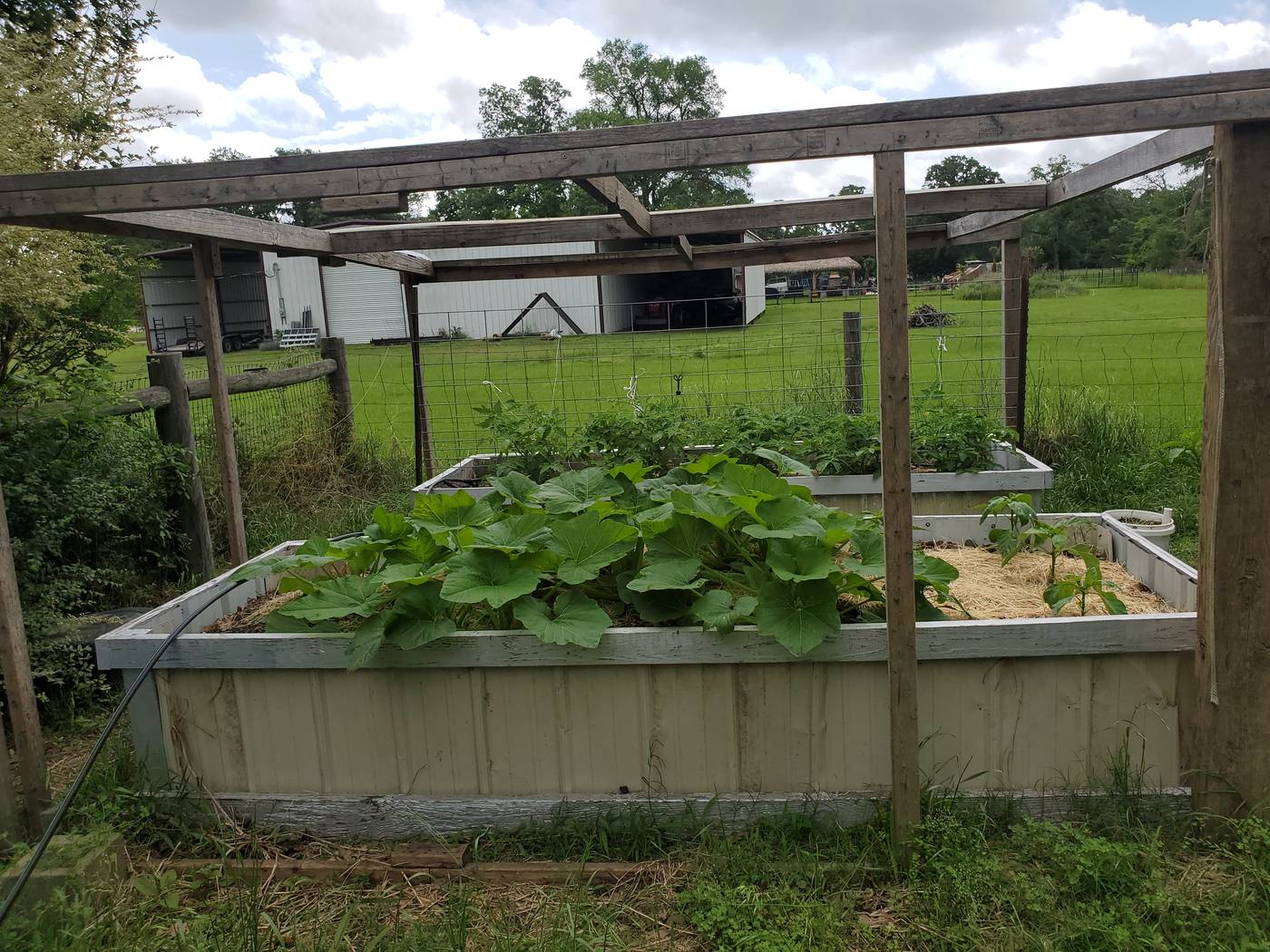
Rotational grazing — letting the land rest
One of the most important practices on Sunstrike Farm isn't planting anything — it's moving animals before they've overgrazed an area. Rotational grazing divides pasture into paddocks and moves cattle and horses between them on a schedule that gives each section time to recover before being grazed again.
This does several things at once: grass recovers fully between grazing events, which encourages deeper root systems and builds organic matter in the soil. Bare ground — where weeds establish and topsoil erodes — is minimized. The animals get fresh, nutritious forage rather than overgrazed stubble. And the manure they deposit is spread more evenly across the property rather than concentrated in one area.
Why it matters for soil health
Continuously grazed pasture gradually degrades — grass roots shorten, bare patches expand, and organic matter in the soil declines. Rotationally grazed pasture does the opposite over time. The rest periods allow plants to photosynthesize fully and pump sugars down into root systems and soil biology. Combined with our composting program, rotational grazing is the foundation of how we're restoring the productive capacity of this land.
Manure to compost — closing the loop
Four pens of horses and cattle produce significant manure every week. Rather than treating it as a waste management problem, we're building a system to convert it into one of the most valuable inputs on the farm — finished compost that goes back into the pastures and garden.
The goal is a three-stage system: one section actively filling, one section actively composting (heating up to temperatures that kill pathogens and weed seeds), and one section of finished material ready to spread or use in potting mix for the tree nursery. Properly managed, horse and cattle manure compost is a rich, stable soil amendment that feeds soil biology, improves water retention, and reduces the need for purchased fertilizer.
This is a project we're actively building — volunteers welcome
We're looking for help building and managing the composting system. If you're interested in soil health, outdoor physical work, and being part of something from the beginning, visit the Connect page to learn more about volunteering with us.
Biochar — wood and crop residue into lasting soil carbon
Central Texas land management often involves clearing invasive cedar and mesquite, pruning trees, and managing crop residues after harvest. Most farms burn this material in open piles and lose the carbon to the atmosphere. We convert ours into biochar using a process called TLUD — Top-Lit Updraft — a simple, low-tech pyrolysis method that burns wood or crop residue in a low-oxygen environment, producing a stable, porous carbon material rather than ash.
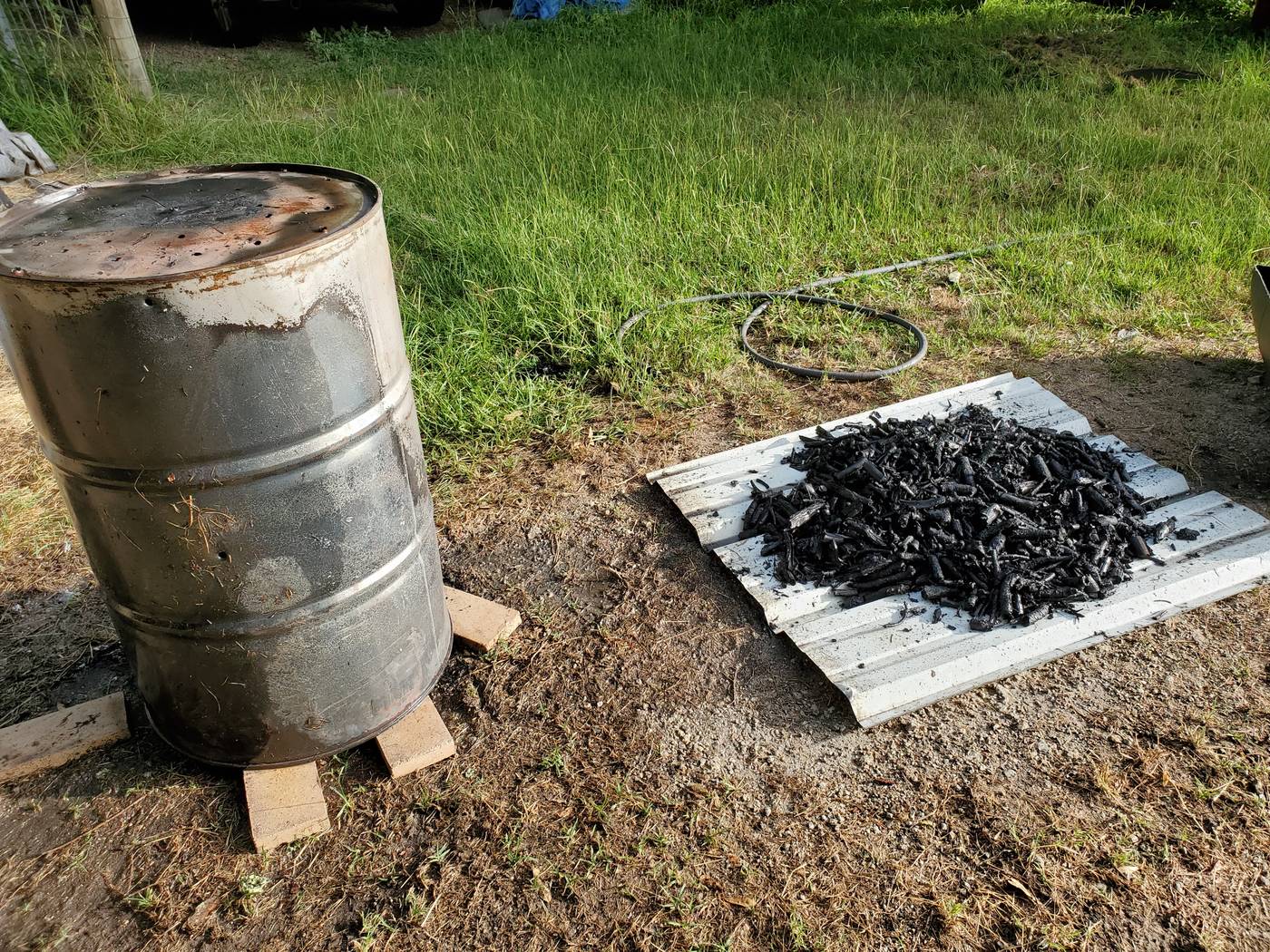
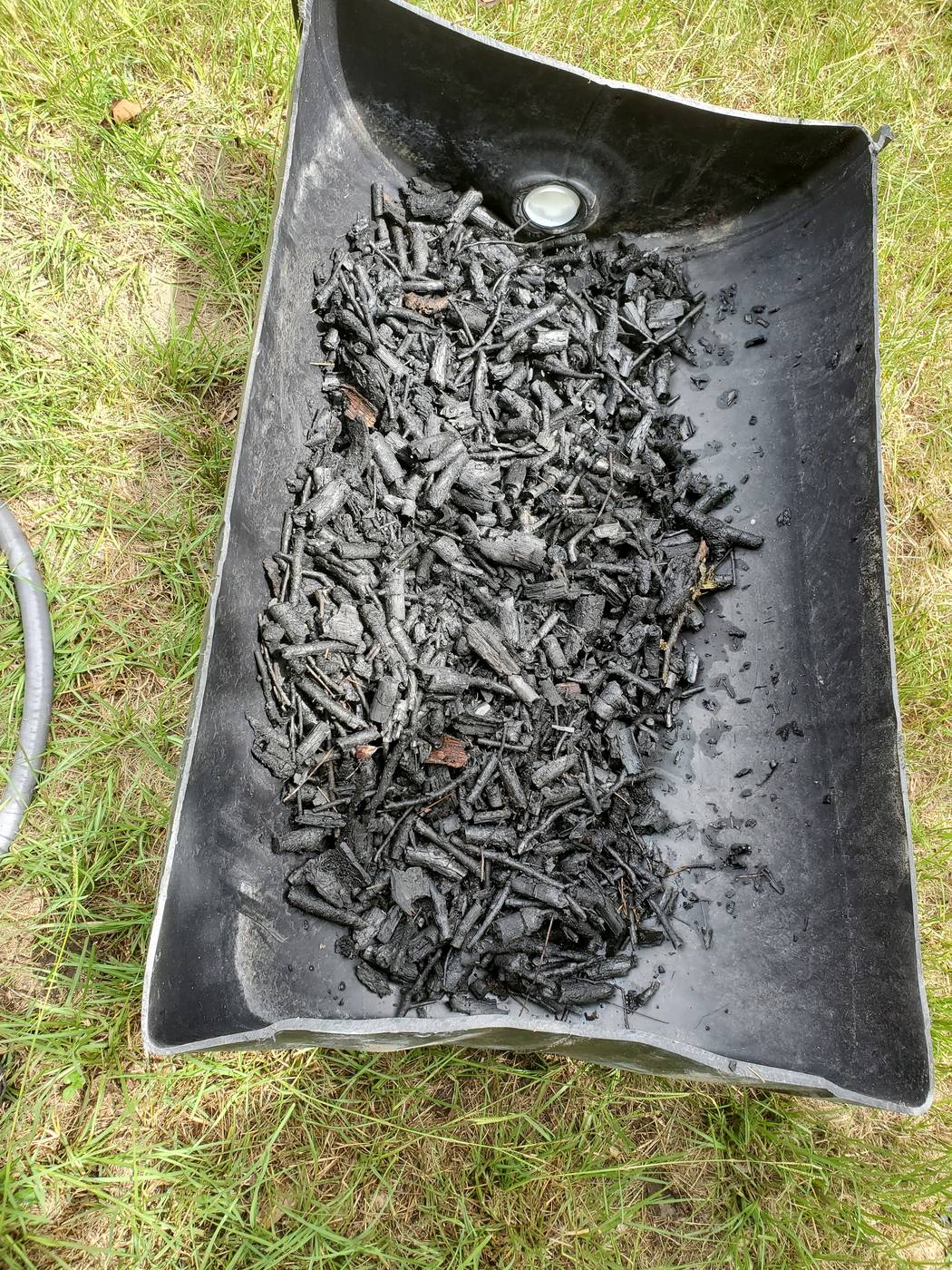
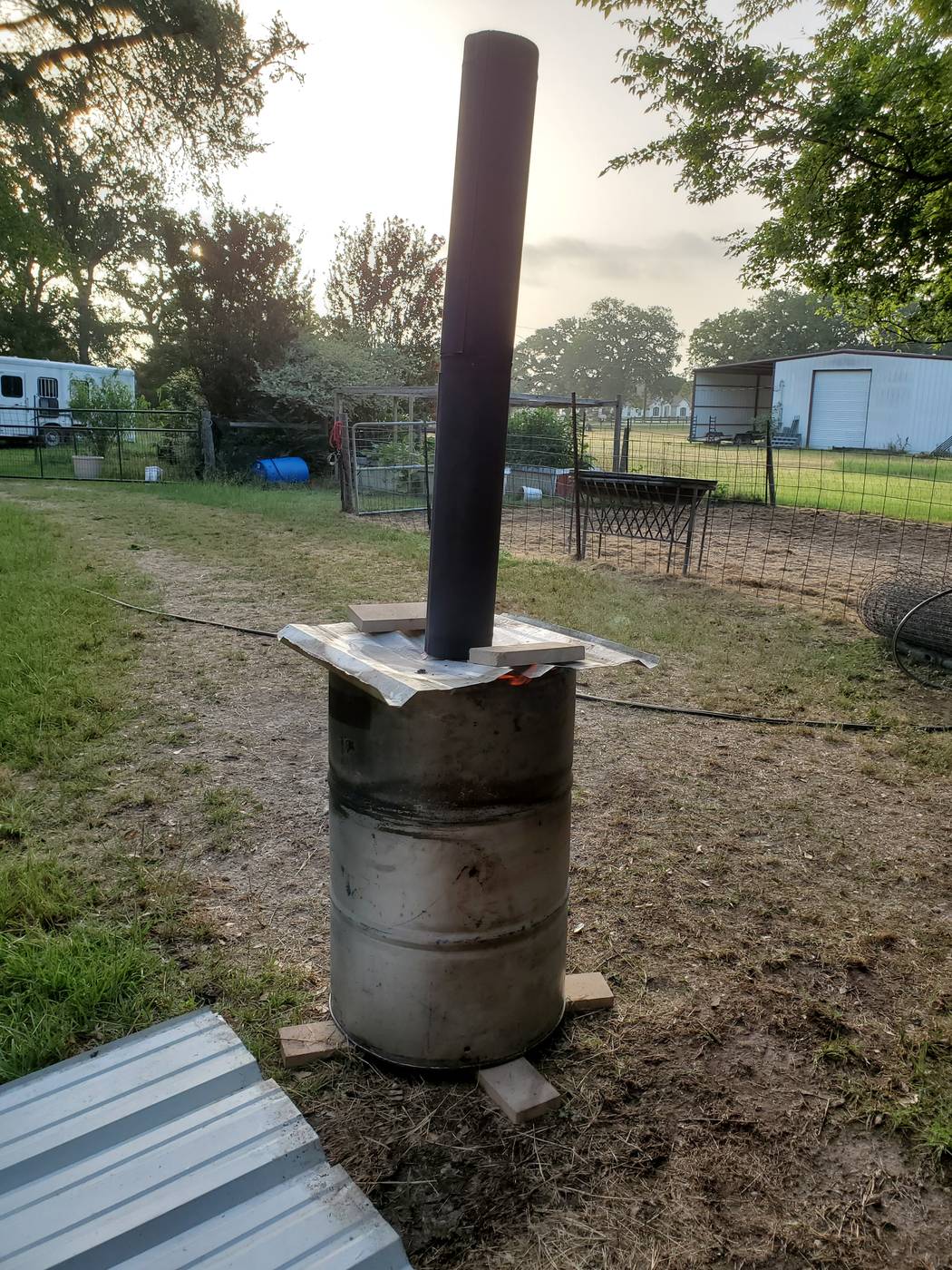
What biochar does for soil
Biochar is not a fertilizer — it's a soil conditioner. Its porous structure creates habitat for soil microorganisms, dramatically increases the soil's ability to hold water and nutrients, and sequesters carbon in a stable form that can persist in soil for hundreds to thousands of years.
When mixed with compost and applied to pasture or garden beds, biochar acts as a sponge — holding nutrients and water in the root zone rather than letting them leach away. It's particularly valuable in sandy or degraded soils, where organic matter has been depleted.
The TLUD process also produces far less smoke than open burning, making it a better neighbor and a better use of material that would otherwise be wasted. Cedar we clear to manage invasive regrowth becomes carbon we return to the soil. That's the kind of loop we're trying to close on this farm.