A different kind of horsemanship
We came from barrel racing and playdays. We're transitioning toward liberty and groundwork — and discovering what horses can offer people who aren't there to ride or compete.
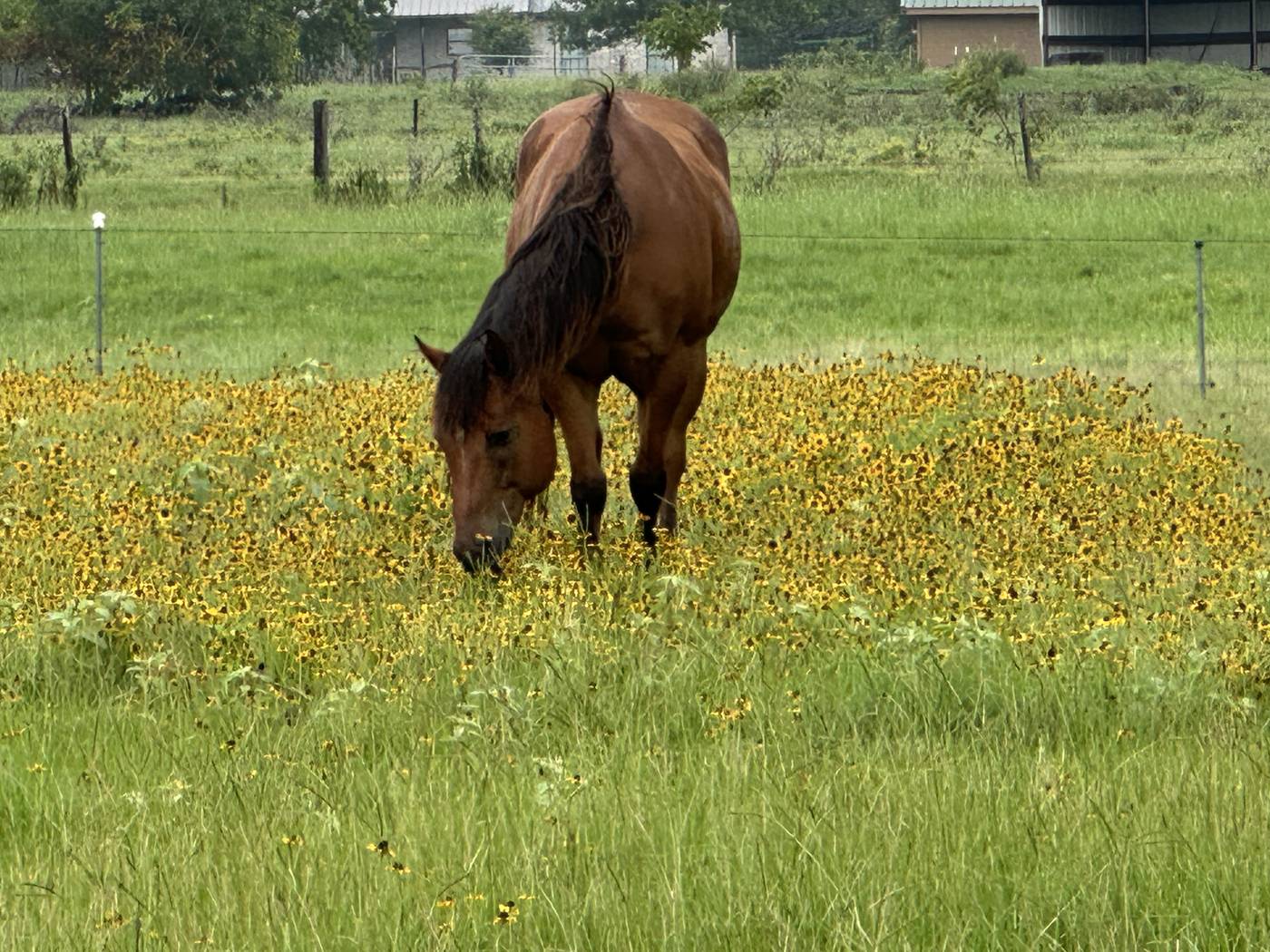
Central Texas. Spring wildflowers. A horse who knows this land.
Some things can't be planned. You just have to be here when they happen.
Meet the horses
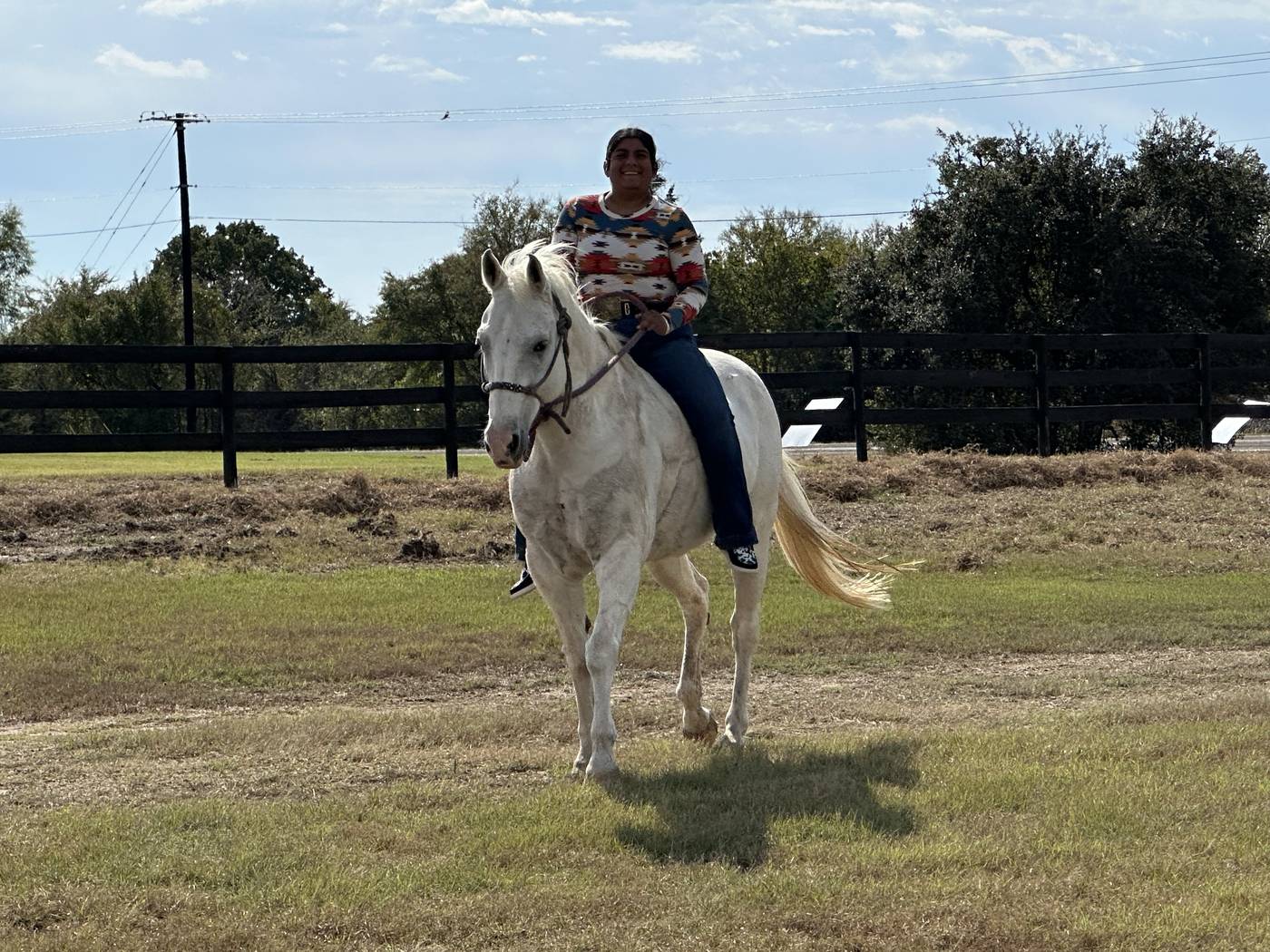
Out on the trail
Our horses have been trail horses, playday horses, and barrel horses. They know how to work and how to be with people.
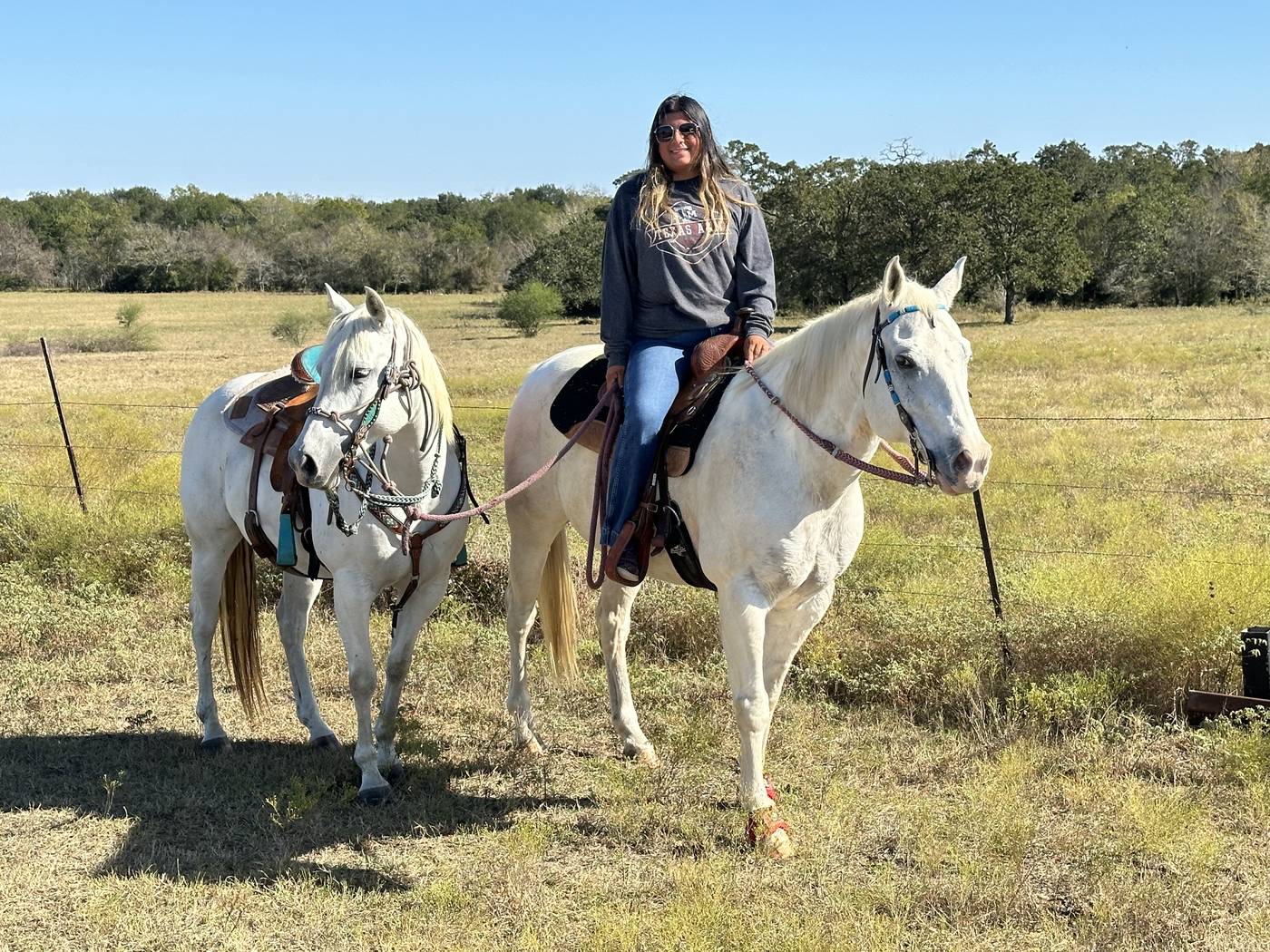
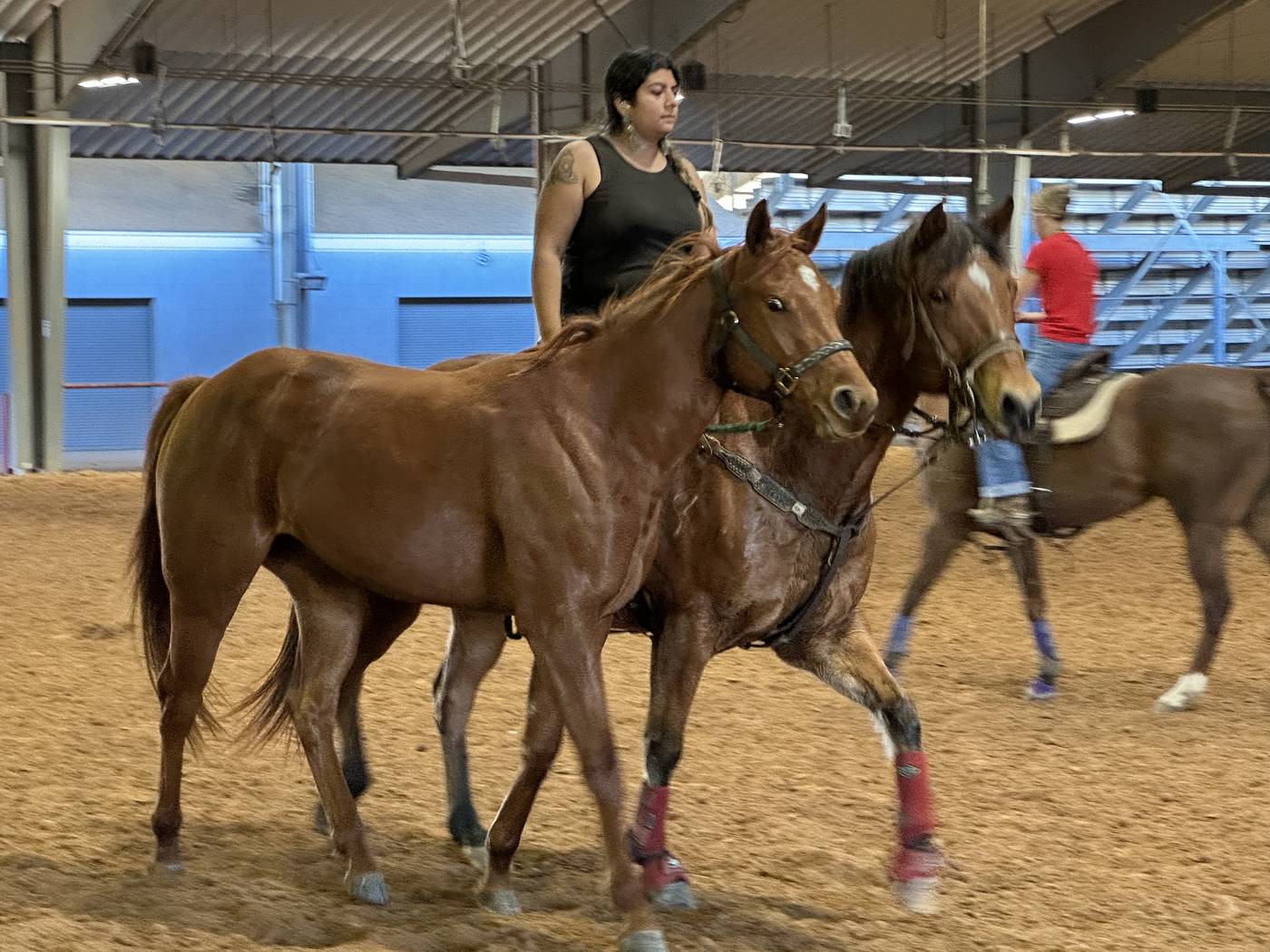
The white pair
Two horses with distinct personalities who have learned to work and move together.
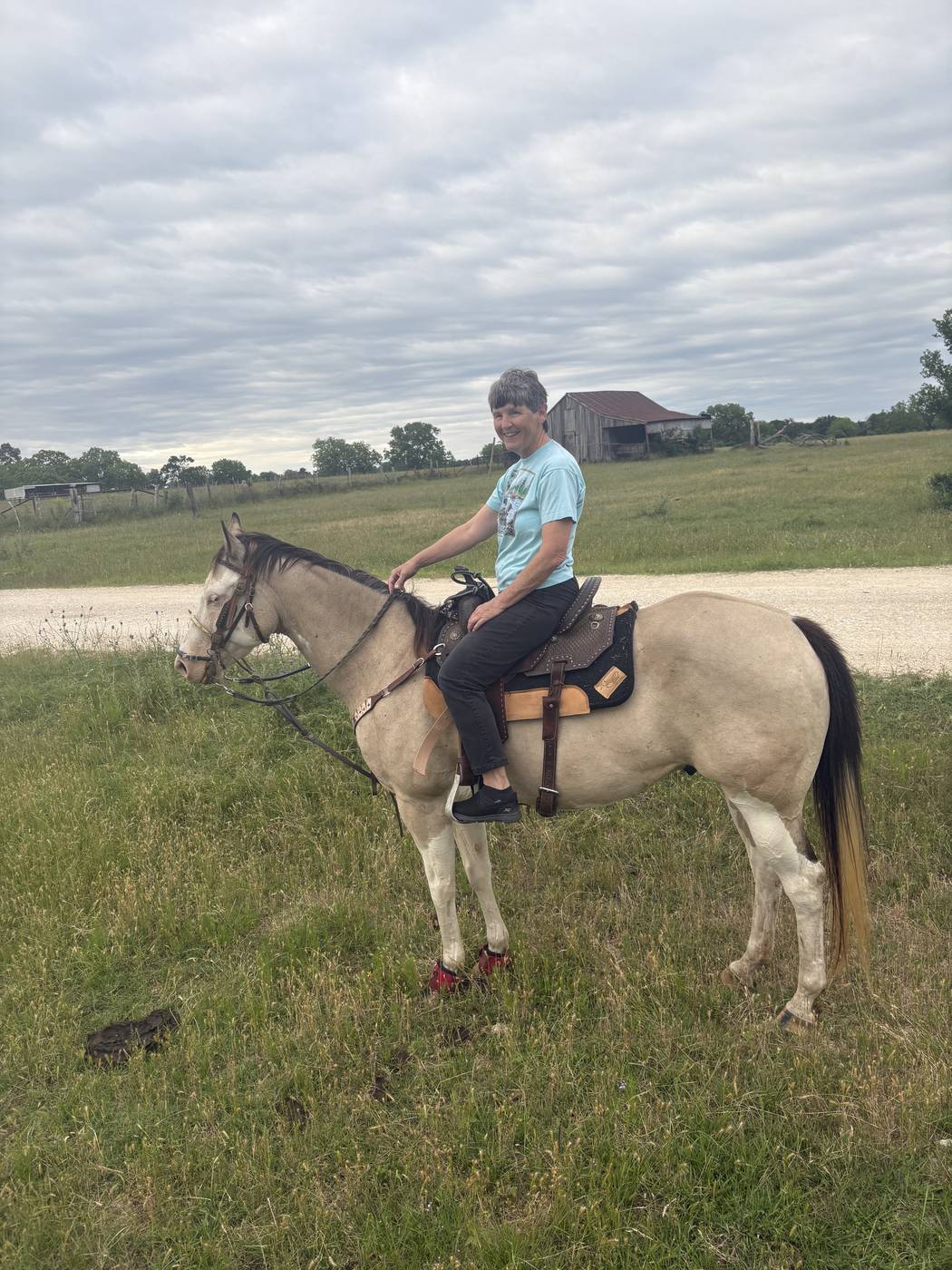
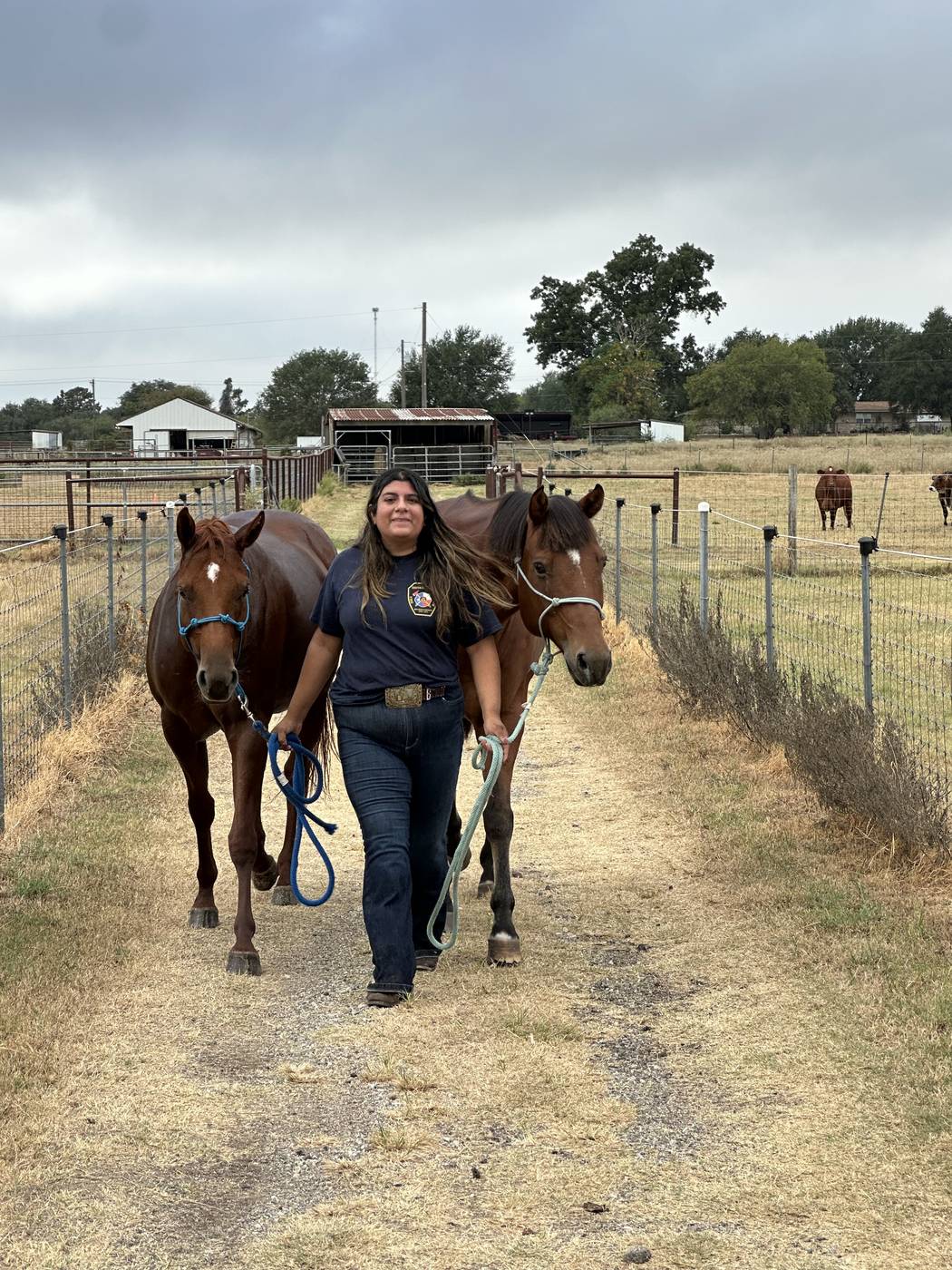
Leading two
A horse that follows willingly when you're riding something else is telling you something about the relationship.
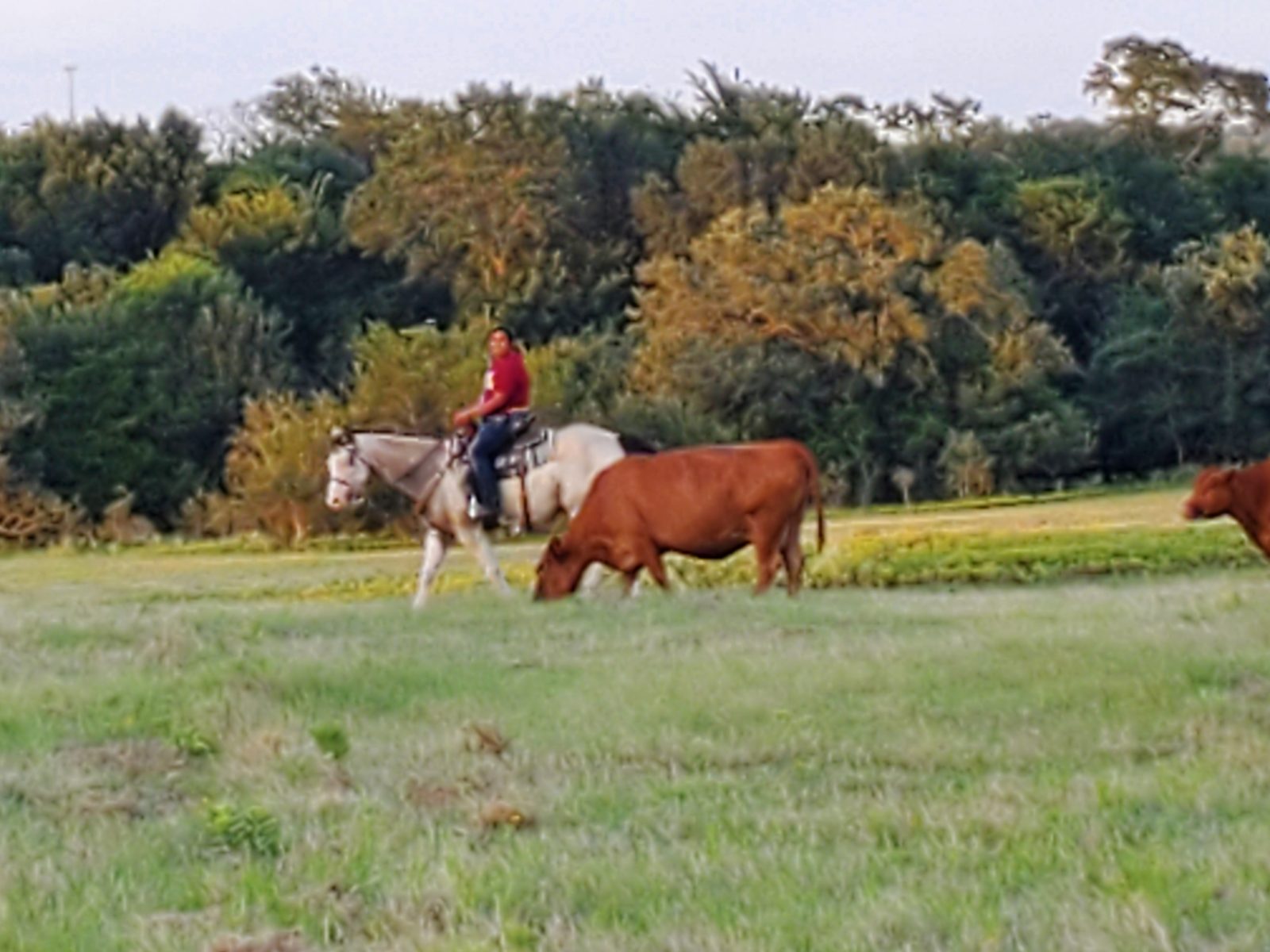
Comfortable with cattle
Our horses grew up alongside cattle and are at home in a mixed-animal environment.
Where we came from — and where we're heading
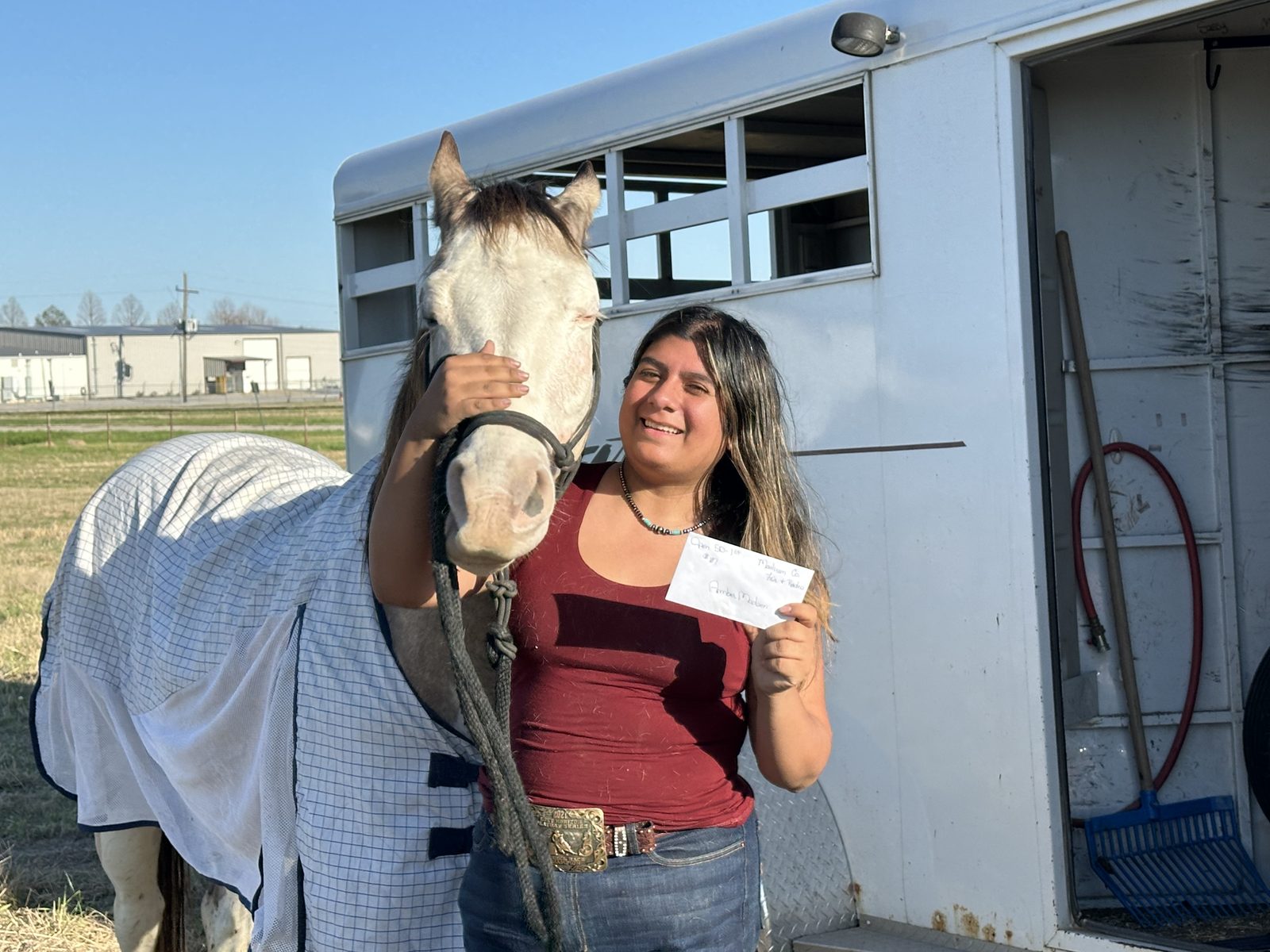
Barrel racing and playdays are how most of our horses' careers started. Fast, willing, competitive. That background gave us horses that know how to work and riders who know how to ride.
What we're discovering is that the horsemanship underneath the sport — the feel, the timing, the release — is also the foundation of something quieter and deeper. Liberty work strips away the equipment until all that's left is relationship. Groundwork builds trust and communication without ever getting in the saddle.
We're studying this actively and building toward it slowly. It's not a program yet. It's a direction we're committed to.
A note for western horse people who are skeptical
Liberty work can look like a trick — or something that makes a horse too soft for real work. In practice the opposite is true. A horse that stays with you, yields to pressure, and responds to the lightest cue with no rope attached is a more honest and willing partner in any discipline. The horsemanship underneath — feel, timing, and release — is the same foundation great western horsemen have always worked from. Liberty just removes what you can lean on, until there's nothing left to hide behind.
What horses can offer beyond the arena
Horses are wired to read the emotional and physical state of everything around them — honestly, constantly, and without judgment. They respond to what you actually project, not what you intend to project. That makes them extraordinary mirrors for the people who spend time with them on the ground.
This isn't therapeutic riding or hippotherapy. It's ground-based time with horses that invites self-reflection without requiring it. We've already done informal sessions through our church — people sitting near the horses, guided breathing, just being present with large animals in an open field. We're building toward something more structured, and we're figuring out what's genuinely useful in this community before building a program.
Resources we're learning from
Rupert Isaacson's work in the equine-assisted field is the clearest map we've found of what's possible — from dementia care programs to veterans work to coaching and personal growth. His podcasts cover the full range of what people are doing with horses beyond riding.