Sunstrike Farm · Free-Range Flock
Chickens & Eggs
The greeters. The soil scratchers. The unofficial farm ambassadors — and yes, they lay eggs too.
Our chickens are free-range and they know it. They were here before most visitors, they'll investigate anything new on the farm, and they have strong opinions about the golf cart. Beyond their eggs, they're doing real ecological work — and they've earned their place on this farm.
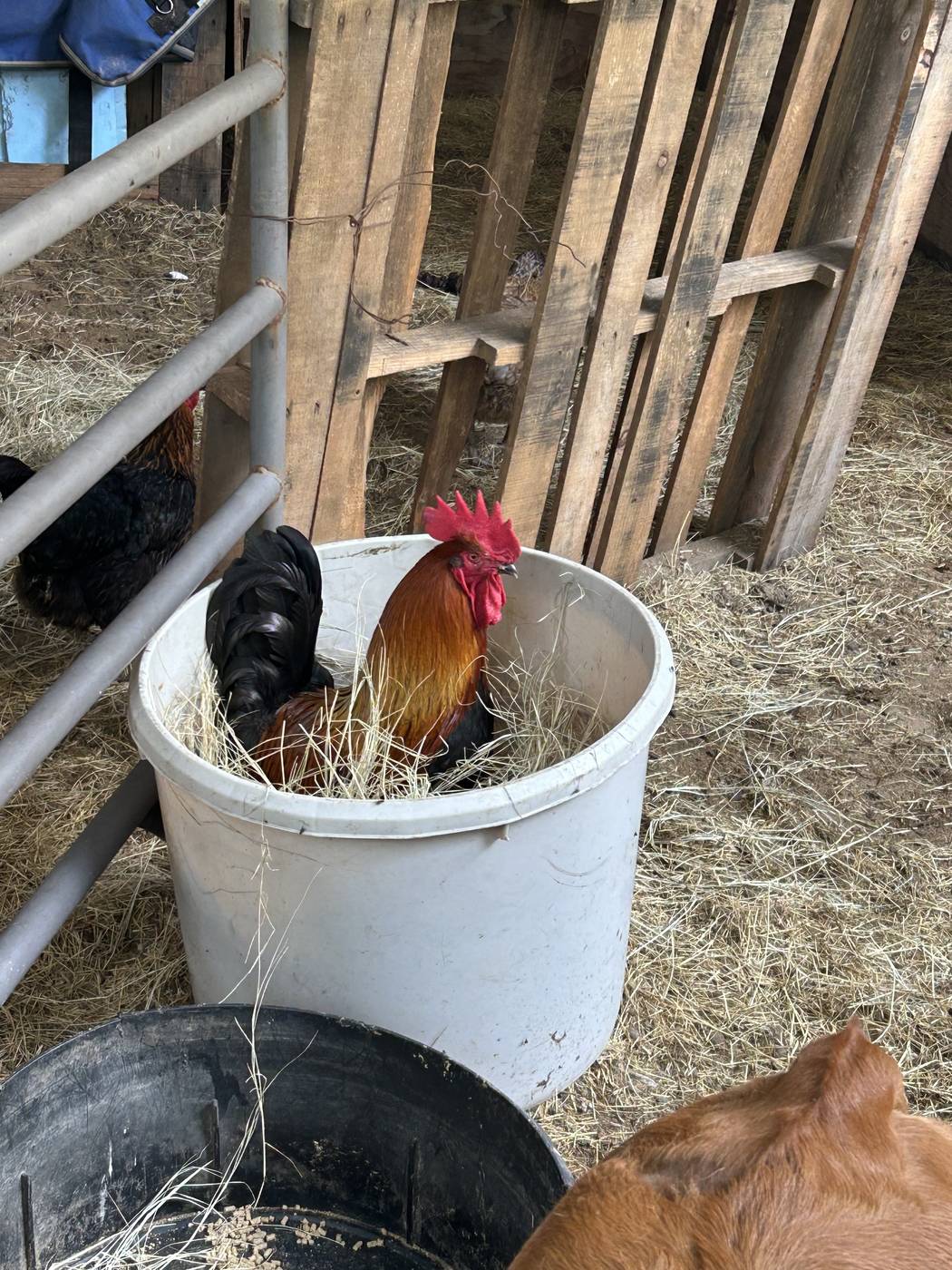
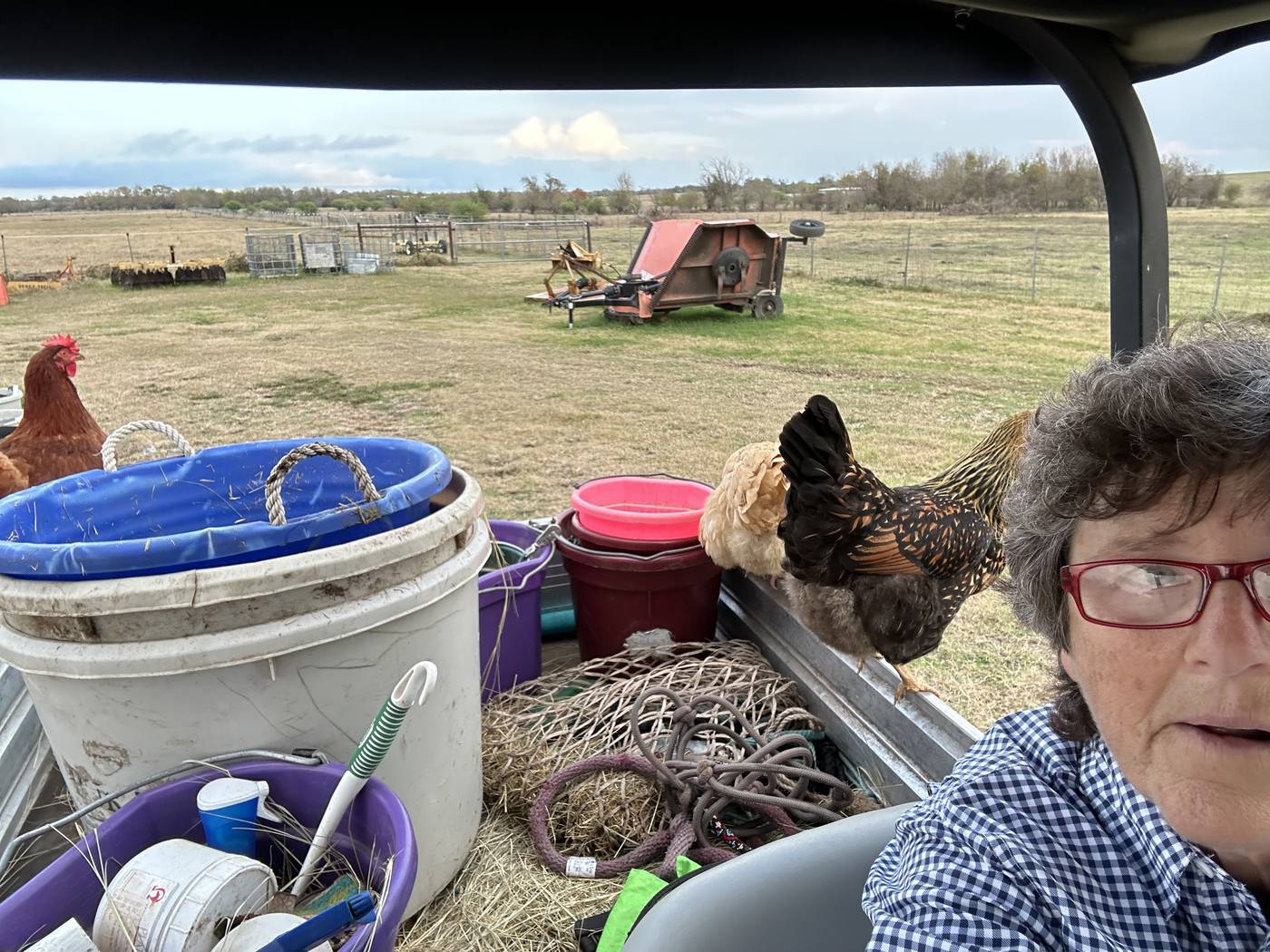
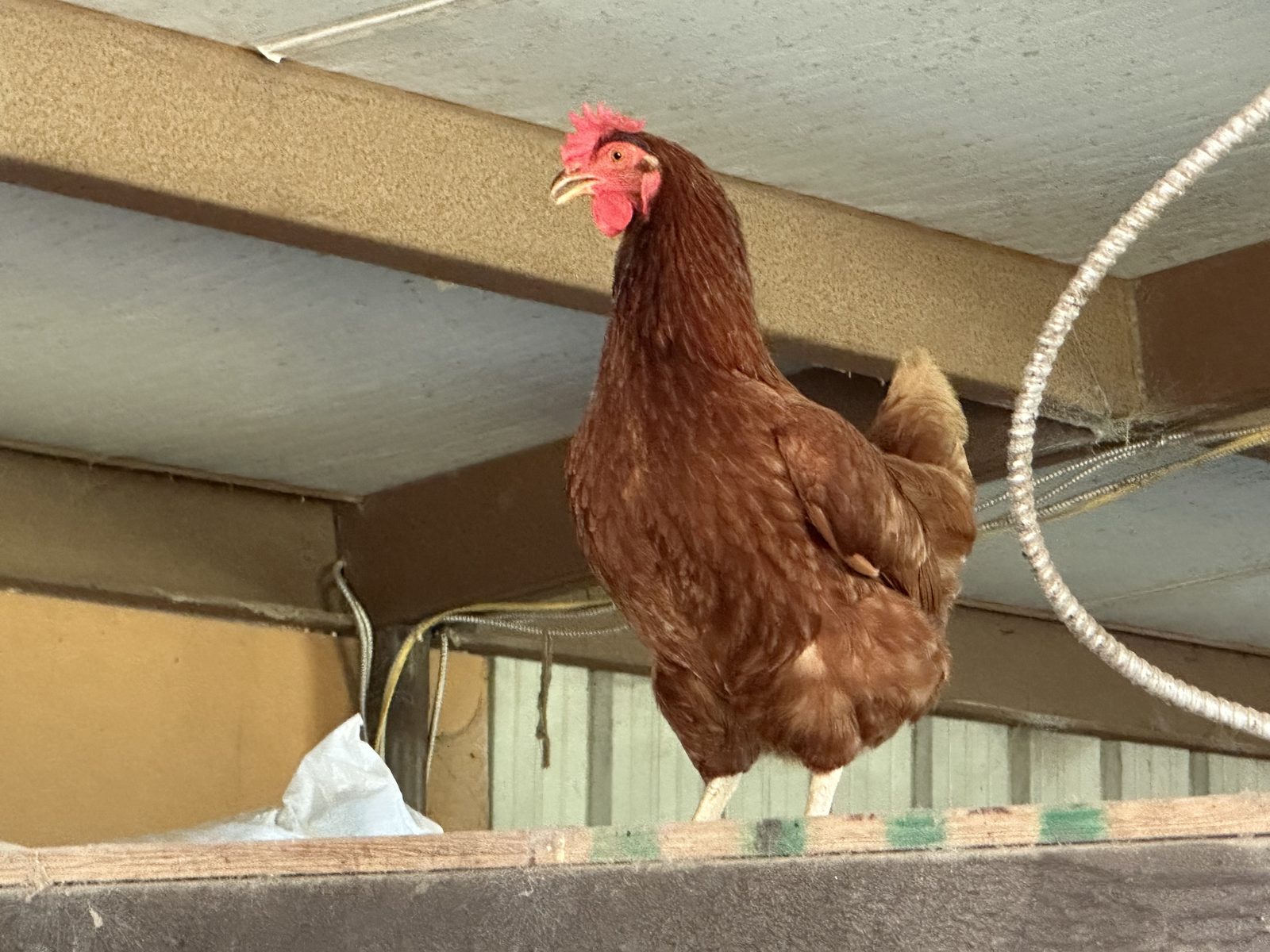
Before you've made it through the gate, the chickens have already spotted you and formed an opinion. They meet every visitor — sometimes underfoot, sometimes from a rooftop vantage point — and they've developed a particular attachment to the golf cart that can only be described as a commute.
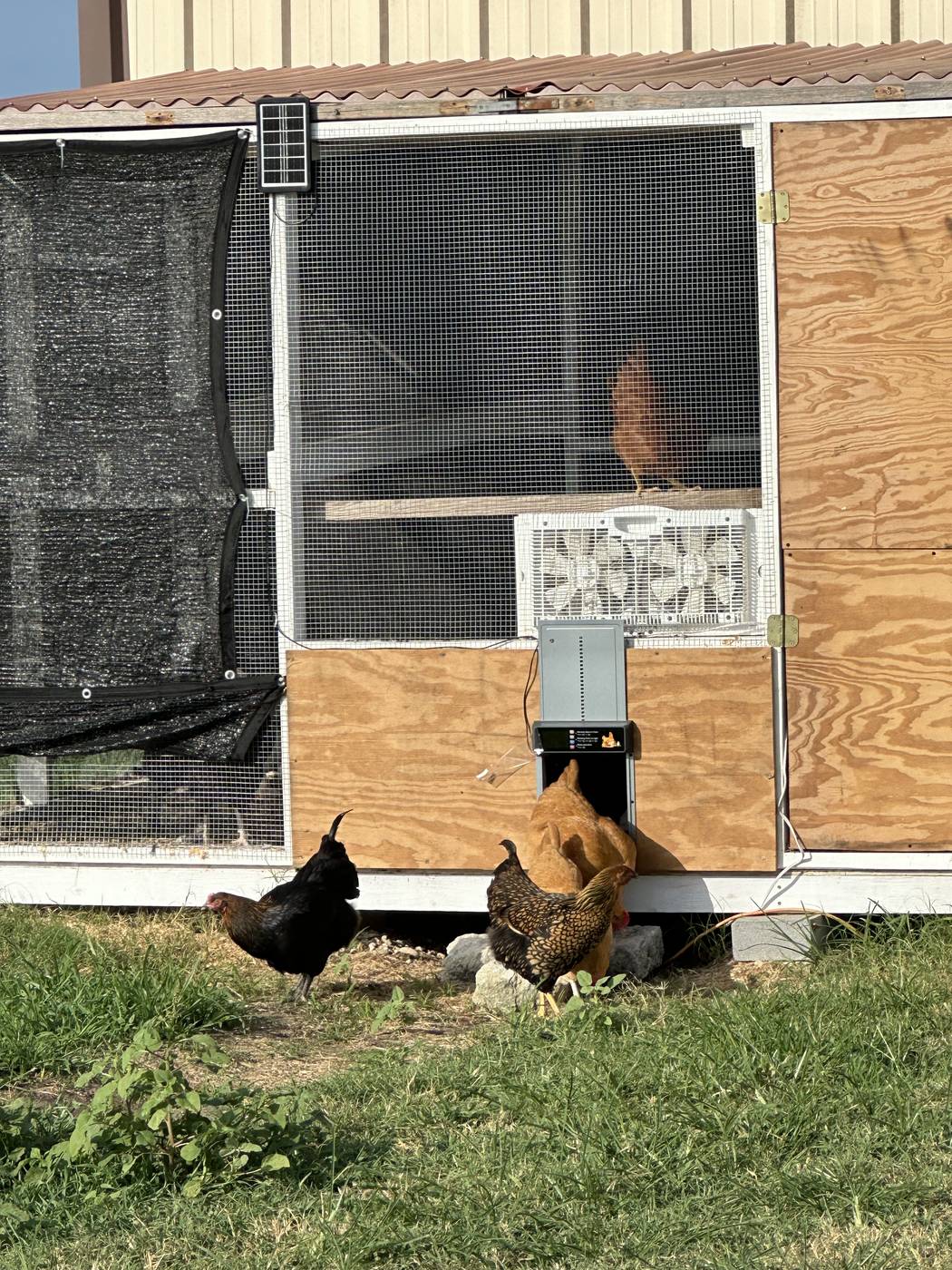
The flock is a mix of breeds chosen for personality and production. They range freely across the farm during the day, returning to the coop on their own schedule. The automatic coop door handles the rest.
Free-range chickens are more than pets with benefits. Their constant scratching, dust bathing, and foraging are doing real work on the soil and pest population — something farmer and author Joel Salatin has documented extensively at Polyface Farm in Virginia.
Chickens scratch through the top layer of soil constantly, breaking up compaction and turning organic matter in. They eat fly larvae, weed seeds, and insects. Their manure — distributed freely as they range — is some of the most nitrogen-rich available, and it's applied directly where it's most needed rather than hauled from a pen.
In Joel Salatin's Polyface Farm system, chickens follow cattle through paddocks a few days after grazing. The chickens scratch through manure piles seeking fly larvae — breaking the pest cycle naturally — while spreading the material and fertilizing in the process. The cattle prep the land; the chickens clean and restore it.
We're working toward this integration at Sunstrike Farm. Our chickens already range near the cattle areas; the goal is a managed rotation where each species does multiple jobs at once and the whole farm benefits from the sequence. This is what regenerative polyculture looks like in practice — not a single animal doing a single job, but a system where everything contributes.
We have about three dozen eggs a week from our small flock. We share them freely with neighbors and friends — no charge. If you're nearby and interested, text us to ask about availability. We keep a short local list and reach out when we have eggs ready.
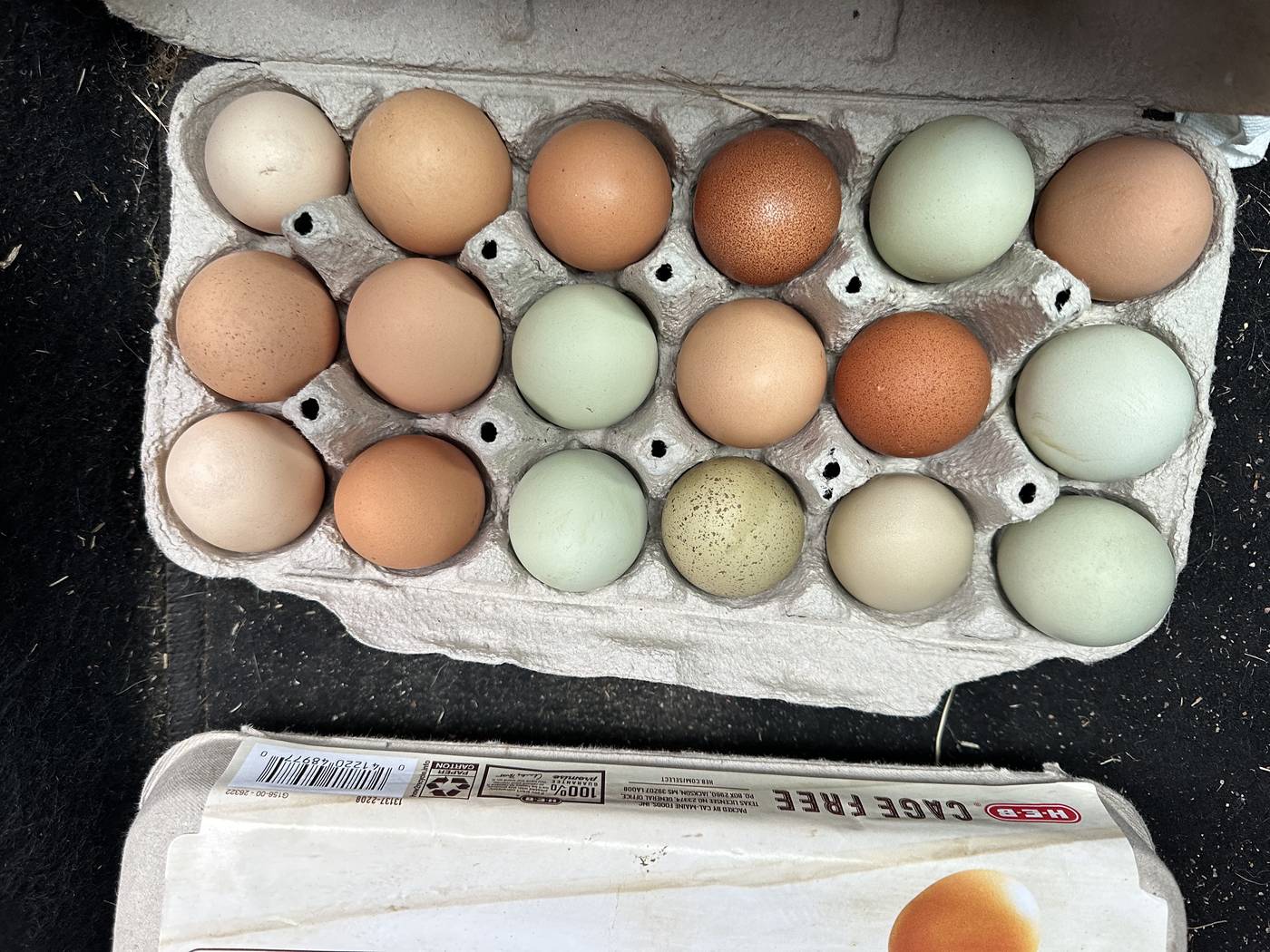
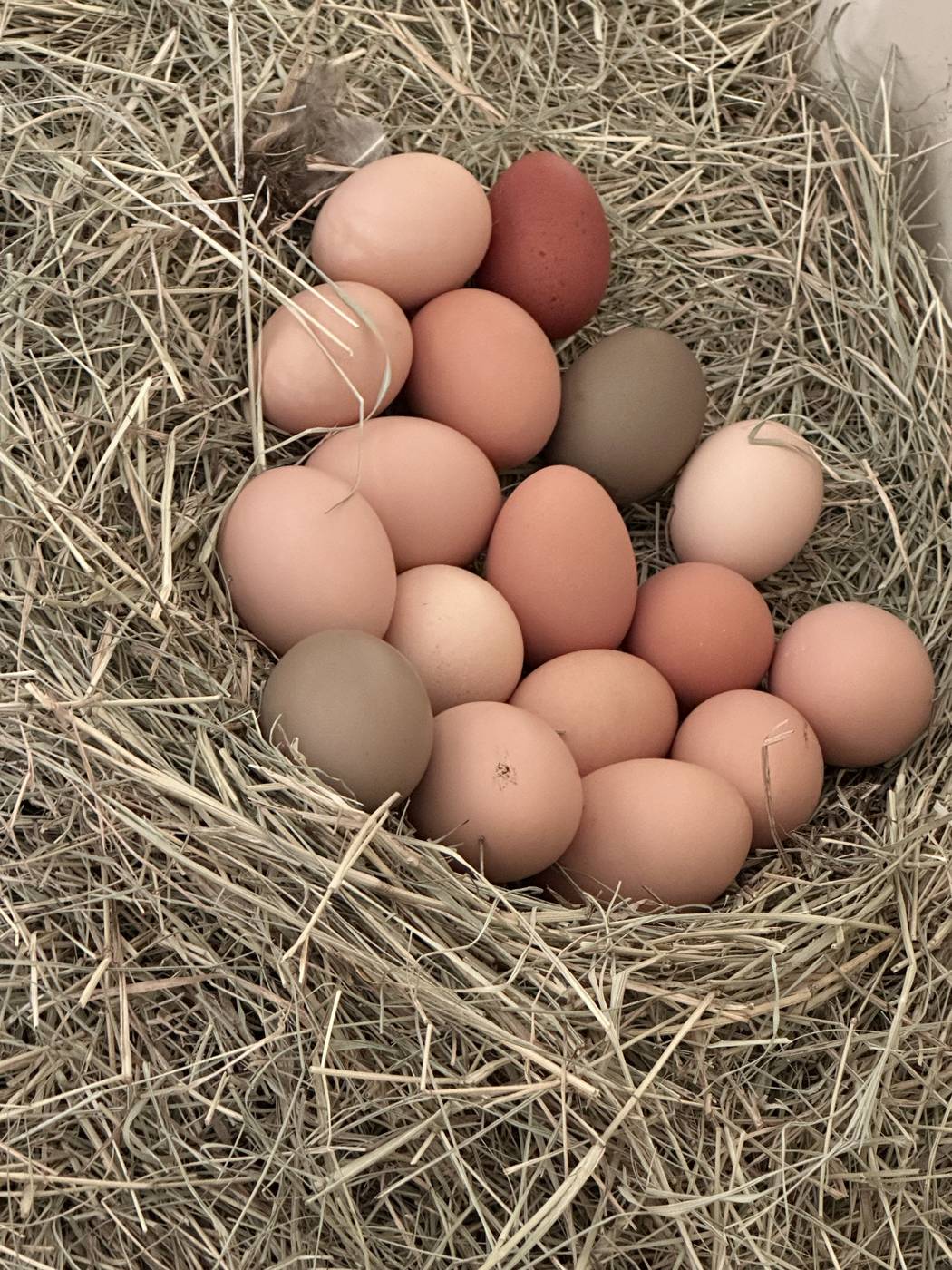
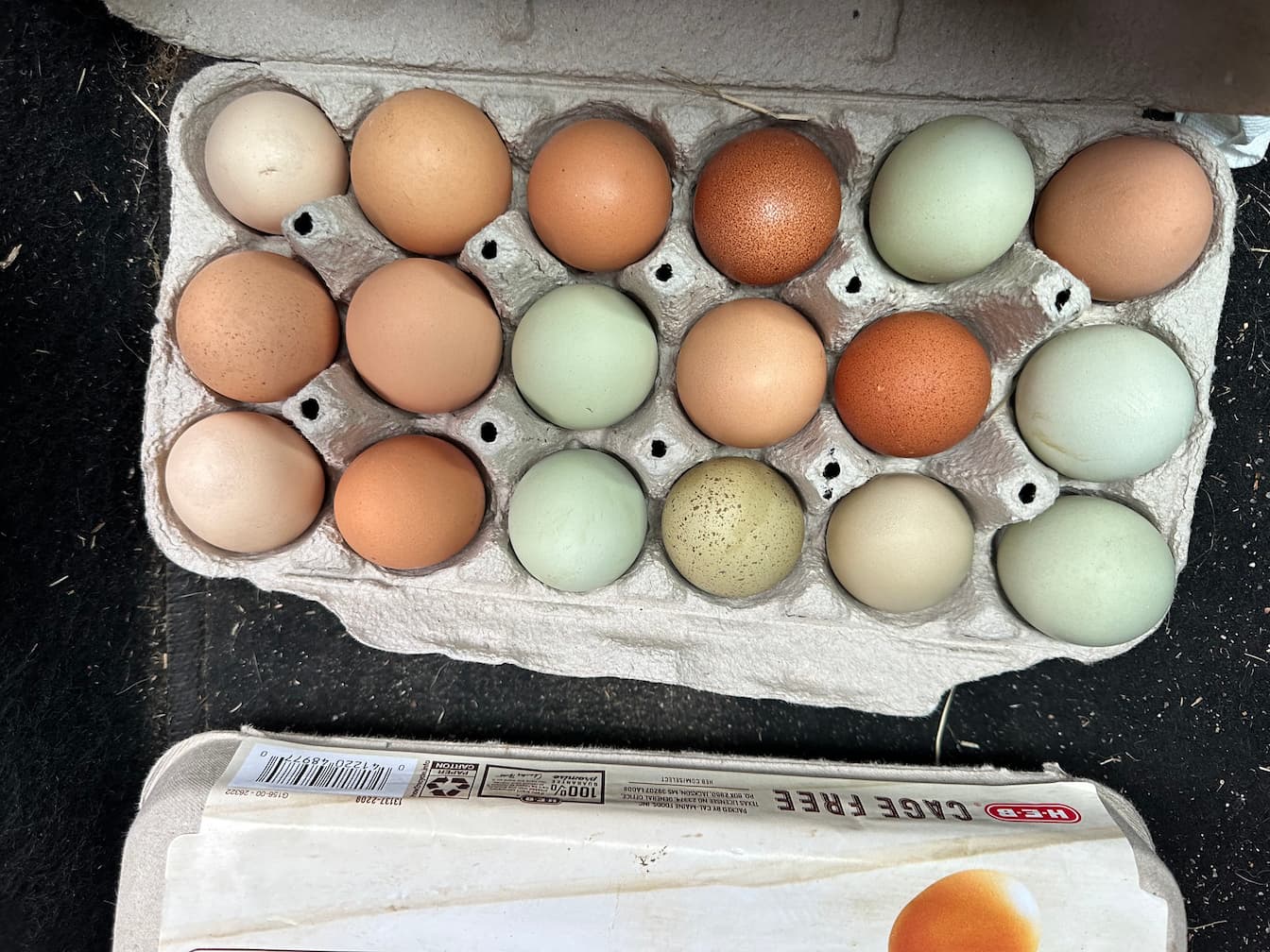
Our hens aren't treated with hormones or antibiotics. They eat what they find ranging the farm plus supplemental feed.
Shell color comes from the hen, not the diet. Our mixed flock lays cream, brown, blue, green, and speckled eggs — all the same inside.
Free-range hens that eat grass, insects, and varied forage produce eggs with rich orange-yellow yolks. This is a sign of diet diversity, not anything added.
We don't wash our eggs before sharing them. The natural protective coating (the bloom) keeps them fresher longer. See below for storage guidance.
When a hen lays an egg, she coats the shell with a natural protective layer called the bloom (or cuticle). This coating seals the shell's tiny pores, keeping bacteria out and moisture in. It's why eggs have survived without refrigeration for most of human history.
Commercial eggs are washed before sale — which removes the bloom, opens the pores, and requires refrigeration. Our eggs are collected daily and shared unwashed, with the bloom intact.
Fill a glass with cold water, gently place the egg in. Watch what it does.

This page lives at sunstrikefarm.com/chickens.html and has everything on your label plus a bit more. Find out about the farm, the horses, the shop, and how to reach us. Text is always fastest for egg requests.
The egg carton label scans to this page — so people who receive eggs can find the farm, learn how to store them, and get in touch directly.